The summer has nearly arrived, meaning it’s also time for insects to rear their ugly heads once again. As we begin to spend more time outside, avoiding insects is not just important for general comfort but also for steering clear of diseases.
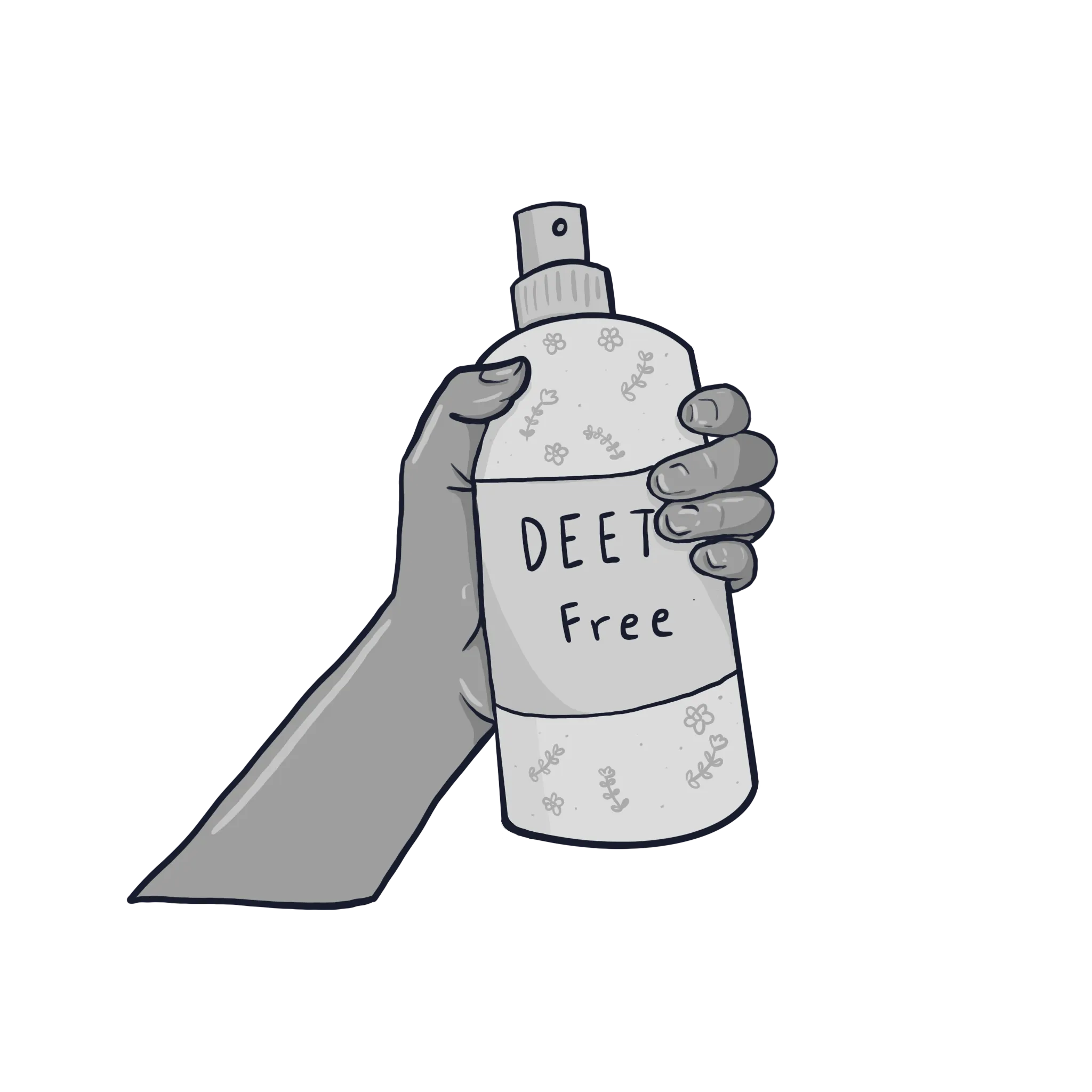
The most common type of insect repellent contains a chemical called N,N-diethyl-meta-toluamide, or DEET for short. This chemical has proven to be very effective, being the strongest bug repellent option on the market and having saved millions of lives in disease-prone areas. However, in places with fewer mosquito-borne diseases, it’s a good idea to move away from DEET as we consider a greener future.
A study by the National Institutes of Health in 2020 shows that DEET is an excellent bug repellent because it disrupts the olfactory system of insects, making it so that insects cannot detect humans. Unfortunately, pollinator insects also rely very heavily on these senses to support their survival and their ecosystem. Compounded with DEET’s long degradation time, this negative externality significantly harms biodiversity, food webs, farming, and many environmental aspects for long periods of time.
DEET also has a few other issues, such as having an unpleasant odor and causing skin irritation. According to the National Pesticide Information Center, it can occasionally be harmful to pets that are nearby while applying the spray, potentially causing seizures if the animal is overexposed. These problems can be solved by switching to plant-based repellents — made from essential oils such as neem, clove, or eucalyptus. Additionally, plantbased repellents degrade much faster than DEET based repellants. Consumer Reports stated in 2023 that because of their fast evaporation time, however, plant-based botanical repellents usually only provide around two hours of protection, requiring frequent reapplication. But given that crucial pollinators are affected far less by botanical sprays, the trade off is worth it to lessen environmental damage.
While alternative insect repellents may offer environmental and health benefits, DEET remains the most effective option in certain contexts. In regions such as sub-Saharan Africa, where mosquito-borne illnesses such as malaria claim hundreds of thousands of lives each year, DEET’s potency makes it a preferred choice. Thus, if you’re traveling to areas with a high risk of insect-borne diseases, using a DEET-based repellent is advisable.
However, even then, you still don’t necessarily need a formula with 100 percent DEET; concentrations of 20 to 30 percent can still offer strong protection with reduced exposure. For those staying in lower-risk areas like Princeton, consider switching to repellents that are less harmful to both your health and the environment. Choosing safer alternatives can still provide adequate protection while minimizing negative impacts.