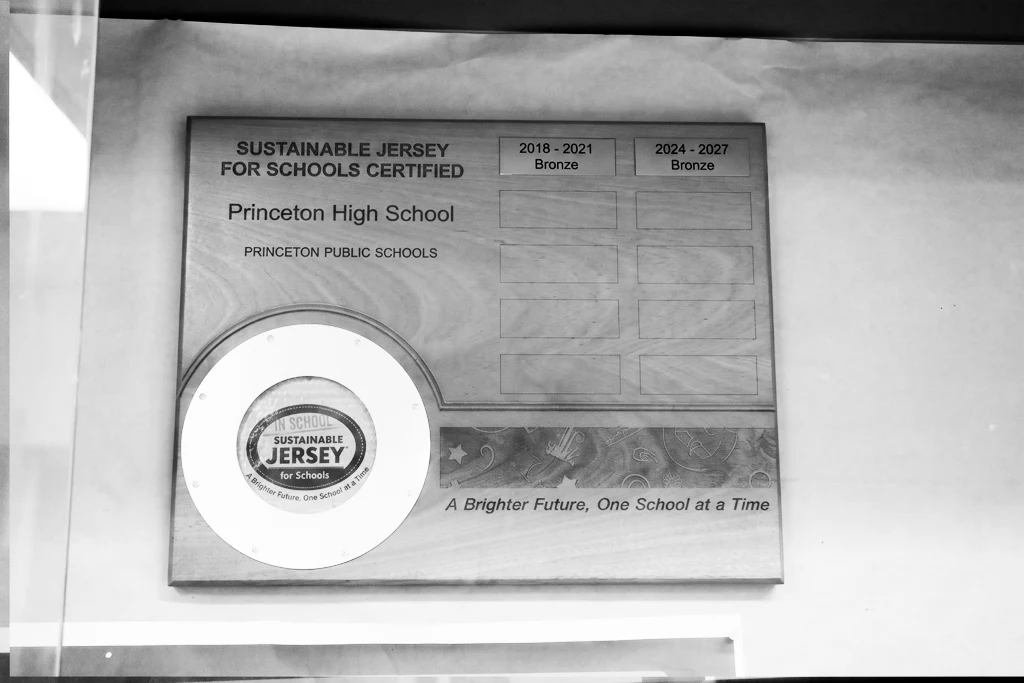
Following PHS’s participation in Sustainable Jersey, in which they earned bronze certification, the school is currently working toward making PHS more environmentally friendly.
Sustainable Jersey, a nonprofit organization, acts with state agencies, industry, and academia to enhance sustainable practices across the state. It awards certifications to schools and municipalities that have met certain standards, PHS being one of its latest renewals. In return, the organization offers grants that have been used by PHS to plant more in the gardens.
Sustainable Jersey’s school program, with over 1000 schools currently participating, is free, voluntary, and open to all public schools. Certifications are awarded based on the number of points a school wins. In order to earn points, schools are required to have an established green team and must submit the steps they have taken towards sustainability from a list of over 100 actions. The more steps a school submits, the more points they gain.
One of the program’s main priorities is to get students involved in environmental actions and the sustainability movement.
“I think the number one reason for me as to why the program is important, especially for schools, is that it introduces students to the world of sustainability,” said JoAnna Contarino, the senior program coordinator at Sustainable Jersey for Schools. “It allows students to learn more about these topics, see how their school building is kind of like a living lab, as to how these things can interact and create actual change in towns and within communities.”
On September 15, PHS’s bronze certification was renewed after its initial award in 2024. In order to achieve and maintain the bronze status, PHS built on several of its previous practices, including maintaining its two ecolabs as well as the courtyard space. According to Jacqueline Katz, the science supervisor, one practice that has contributed to the certification is the waste audits organized by the PHS Sustainable Environmental Systems class.
“Students in that class developed their own projects to help inform the community and take steps toward sustainability,” said Katz. “So one student is working on developing a plan to collect and repurpose a lot of the things people leave behind in their lockers at the end of the school year. … It’s jackets and unused notebooks and all of these things.”
The cooperation between different departments at the school was also a crucial factor in allowing PHS to develop their sustainability practices.
“The science department takes on a lot of the work, but there’s also some really strong advocates in the history department. … Another thing that contributed to our bronze award was a joint effort between the humanities department and the science department last year where we did a sustainability round table,” Katz said.
In order to work toward a silver certification, the science department is looking to reduce their environmental impact by using more locally grown food in the cafeteria. Groups like the Courtyard Farmers Association and the environmental science classes have been working to make the gardens more prosperous. By doing so, the cafeteria can use produce from the gardens, minimizing the school’s impact on the environment from transporting produce.
However, not all students have been made aware of the new bronze certification, or even that PHS has been practicing sustainability at all. Katz addressed this sentiment.
“We need advocates in this realm, right? This is gonna be a continuous problem that we’re going to deal with,” said Katz. “Your generation’s going to deal with [it]. I think starting to get students informed and learning how to use their voices for positive change is one of the best lessons we can pass on in a school.”