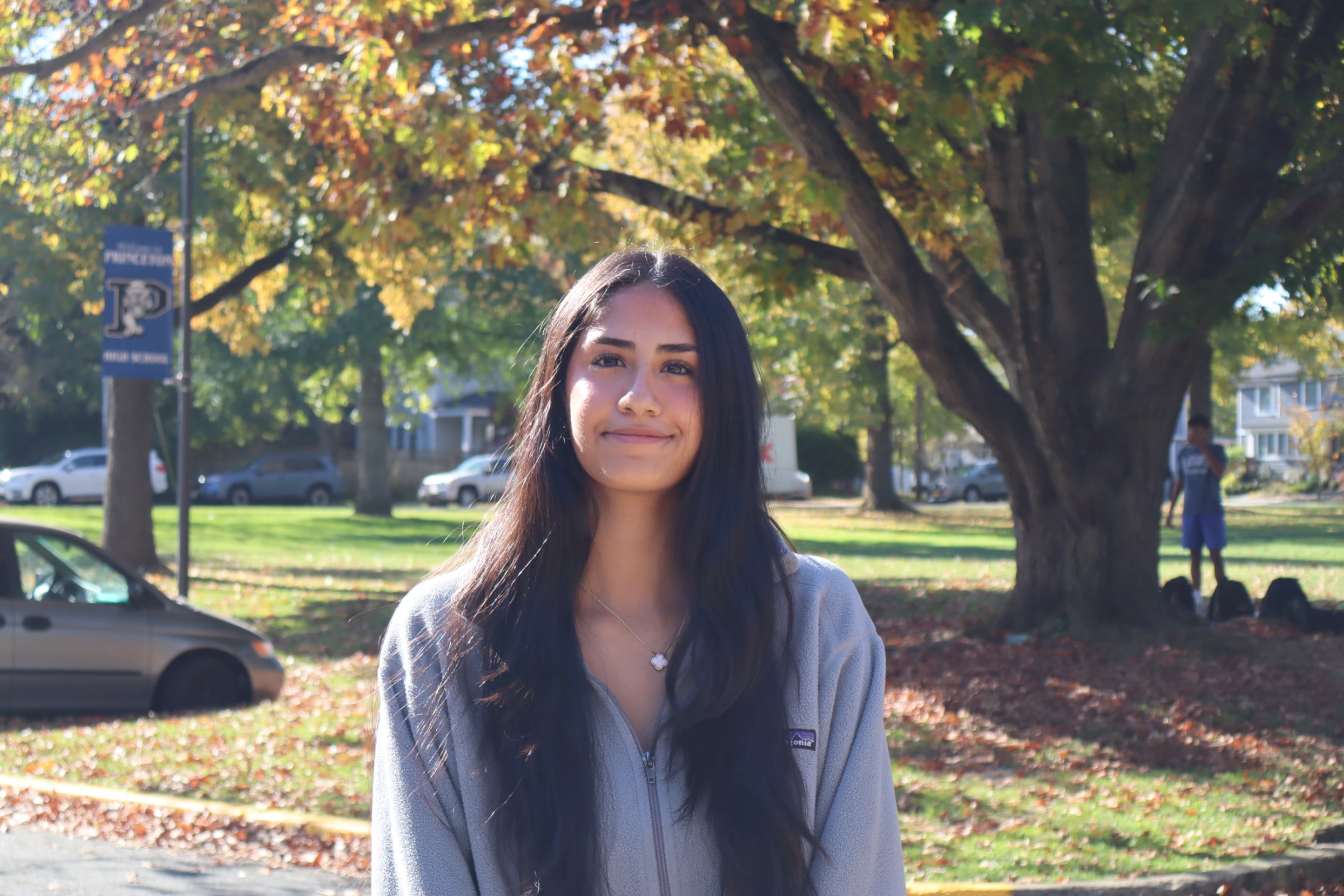
Can you describe the moment you got injured and how you were feeling?
Marina Hedges ’29, Cross Country: I got injured during winter track ... [while] we were running in the hallways. The surface was really hard on my knees, so my knees were hurting the next day. At first, I didn’t think it was that serious, so I figured it would just go away on its own, but I ended up having to go to physical therapy.
Nisma Mobin-Uddin ’28, Volleyball: The day before our first preseason opening game, a glass candle had dropped on the floor, and I picked it up, my hand slipped, and I cut a nerve in my hand. At the moment, I didn’t realize it was that deep or anything. I didn’t think it was a big deal at all.
But when I went to urgent care, and they assessed it, they said that I cut my nerve. So they sewed it back up and I went to see a hand specialist later on who said to let it heal. So I obviously couldn’t go to preseason or go to tryouts. And I have been able to play now, but I have a loss of sensation on one side of my hand, so I actually will need to have surgery in early November even though my hand is healed, which is kind of unfortunate. But it’s okay because I’ll be back in better shape for next season.
Ray Yamada ’29, Soccer: So I was on the freshman soccer team and we were scrimmaging against the JV team, and I tried to shoot the ball with my right foot. And the moment I shot it, my hip kind of cracked.
It felt like it popped. And I just couldn’t feel my leg — my right leg mostly — and I went on the ground. It was pretty painful. It was an avulsion fracture, where a muscle [is] pulled. And because the muscle was tight, it pulled on the bone and it kind of tore off a fracture.
What was going through your mind when you realized you would have to sit out for a big section of practice and miss your games and tournaments?
Marina Hedges: I felt very defeated because I couldn’t practice, I couldn’t do any races, and my injury lasted for a while, which really interrupted my season.
It also caused me to lose part of my motivation. So, during spring track, I actually ended up quitting because I felt like my season was too interrupted to keep going, and I just didn’t feel like getting back into it.
Mobin-Uddin: When I first cut my hand, I didn’t even cry or anything, [because] it didn’t really hurt that bad. When I realized I couldn’t play volleyball, I was so sad, ‘cause it was my junior year, and I was really hoping to play with all my friends; and honestly, I was just sad, because I correlate playing volleyball with my happiness so heavily and knowing [that] I [won’t] to be able to play that, it honestly just made me sad.
[But] I still came to practice and everything to be with everyone.
Yamada: It was pretty early on into the season, so because the freshman team is the most “enjoyable” season out of all like three levels of soccer since you’re guaranteed to be with your friends from the same age and the same grade. It was really upsetting because I was also having a pretty good season so far, and to be not able to play for the rest of the season was a pretty painful thing to deal with.
What do you think was the hardest part of dealing with this injury, and how do you keep a positive mindset even if you can’t play with your teammates and attend practices anymore?
Hedges: I stayed positive throughout my injury by thinking about how I would eventually get better, and that I always had the next year or the next season to continue training.
And now I’m back doing cross country this year, I’m happy that I can continue training. My teammates were also really supportive. They would ask me how my injury is and then tell me it’s going to be fine and I would be able to return very soon.
Mobin-Uddin: I think it’s just the time off is really the hardest part, like knowing you want to do something so bad, and you’re just not allowed to do it. Also, the shock going with it. All throughout the summer, I had been planning to prepare for the season, and finding out I wouldn’t be able to play the night before it started was so unfortunate. I didn’t expect it.
Honestly, just still being around with everyone, everyone’s so supportive, and I just love seeing everyone’s faces around the hallway. So I am just keeping myself occupied with things to do, even though I will not be playing any games, like being around the team.
Yamada: I went on crutches for around two weeks. Since it was an avulsion fracture, I could walk after the two weeks, but I still couldn’t play sports or do any explosive activity. After, the doctor told me to wait for six weeks for physical therapy and start restrengthening my hip. But, mentally, it was hard to just watch my friends play while I couldn’t play.
I still supported the team by going to the games. And I still enjoyed freshman season — being around with my friends and the team. So it was still pretty fun to be part of the team and support, even though I couldn’t play and be on the field.
What words of advice would you share with another student athlete who is facing an injury right now?
Hedges: I would suggest to just keep a positive mindset and continue to do exercises and go to physical therapy to help your injury. Or, just rest so that you can recover faster, and then continue with your sport.
Mobin-Uddin: First you have to come to terms with the idea that you’re going to be out of play, and that you’re going to have to take some time off to heal for yourself. Because, if you’re just trying to go back, that’s when you can get reinjured, or just put yourself in a bad [mindset]. So, find areas where you still can do some things. For example, I could still walk, so I would go and walk around the court during practices.
Yamada: You just have to first focus on recovering before doing anything else, because if I didn’t go through all the physical therapy and recovering, then the injury would not have fully healed, so it probably would have gotten worse over time. Not all injuries are the end of your sporting career.