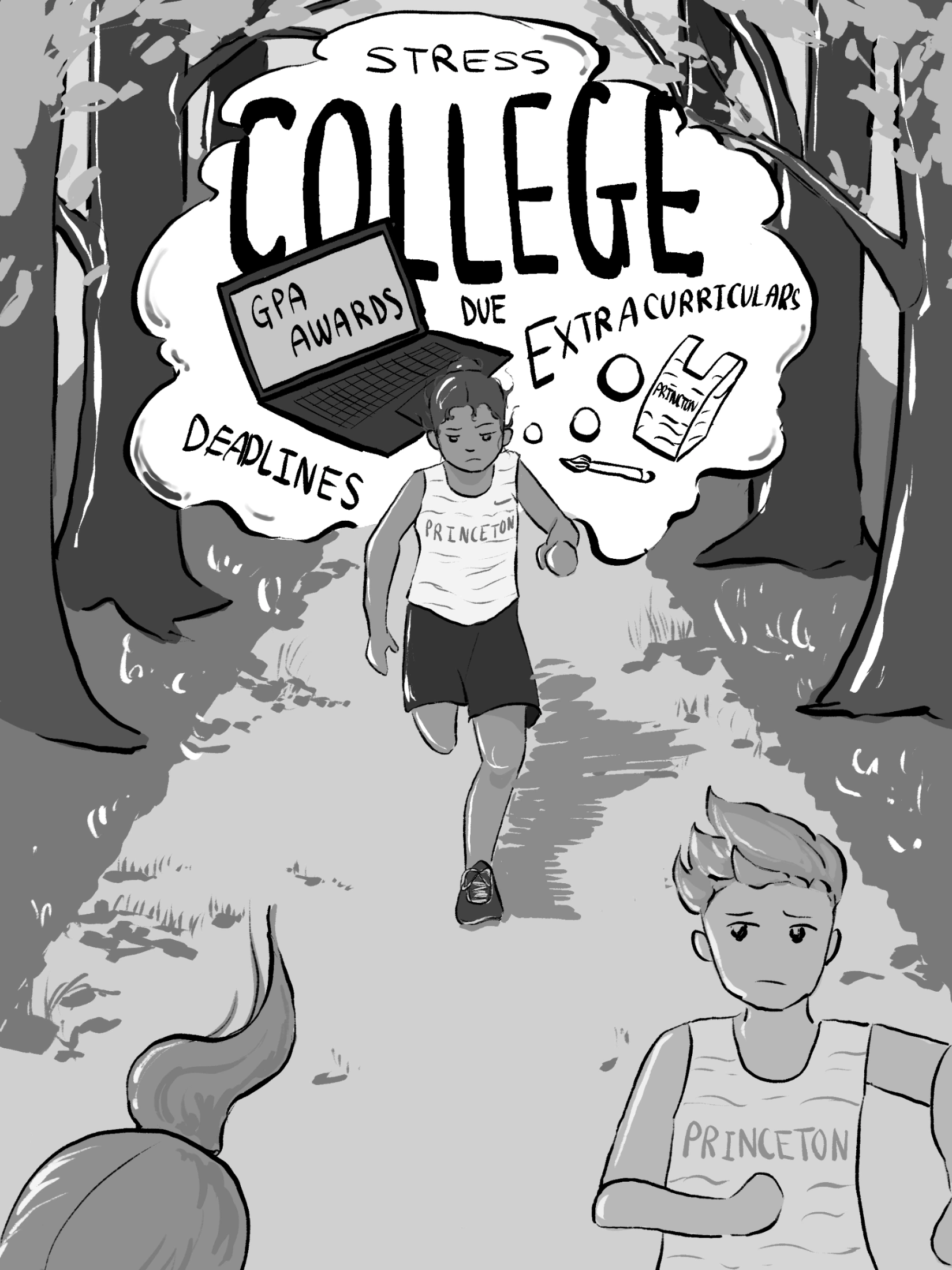
Athletes going through college recruitment are getting squeezed out by the admissions process. For many high schoolers, talent grabs coaches’ attention, but academics make the final call. However, the admissions process makes it difficult for these athletes to make sure they maintain their high level of performance.
Recruiting and applying are two sides of the same coin. Recruiting has its own timeframe where coaches can identify and build relationships with a prospect starting at the end of sophomore year. But the verbal commitment or interest shown by a coach is not legally binding until their actual application is reviewed and accepted. All athletes still have to go through the whole process of applying, including transcripts, essays, recommendations, and deadlines. Being an athlete doesn’t guarantee an easier route to college; if anything, the recruiting process makes things more complicated. In fact, people often ignore the efforts of athletes, marking it off as a “free path into college.”
“There’s so much time put into everything [like] calls [and college] visits,” said Grace Hegedus ’27, a track and cross country athlete who recently committed to the University of Richmond. “Some people don’t ... account for that, and they tell me how lucky I am to be committed, even though it was hard.”
This means that applications are just as important, if not more so than the recruitment process, pushing students to do their best in both worlds. But for many high schoolers, applications are already extremely time-consuming. Therefore, the regular application process becomes even more challenging when paired with the additional burden of the recruitment process.
“The direct recruiting process for track and field and cross country is definitely student-driven,” said cross country and track Head Coach James Smirk.
With the introduction of these responsibilities, it is only natural that some athletes may have to rethink what takes precedence in their lives. Mathew Ocampo ’27, a wrestler, finds that his school-sport balance has been ever-changing, being particularly jumbled.
“It’s a really rough balance of both, where some days I am prioritizing school, and I might even miss practice,” said Ocampo. “Or, I’m prioritizing wrestling and I forget to submit an assignment.”
The additional work these athletes take on means they must make sacrifices. But sacrifices mean an athlete can’t give their full attention to their sport, limiting their success in competitions, impairing their case for recruitment. On the other hand, a weaker application may limit entry into colleges where athletes may otherwise be able to get in.
“The first thing a coach asks you is, ‘can you get in here [academically]?’ ‘Cause if you can’t get in here, this conversation probably isn’t going to hold,” said Smirk.
The deadlines, procedure, and everything that entails the application process also heavily limit the choice of schools athletes have.
“It’s definitely getting rougher. I just recently finished my Common App, and I’m working on my supplementals right now,” said Ocampo. “You know, there’s so many schools that I want to apply to, [but] I can’t apply to every single school all at once. I have to shorten my list because of that as well.”
In a search for their “perfect school,” many athletes can feel overburdened or stressed out.
“I feel like I put a lot of strain on myself. I get nervous, or I get lost. [It’s] like I don’t know what to do,” said Hegedus. For anyone interested in the college sports recruiting process, it’s important to remember to continue working hard, both in classes and in practices.