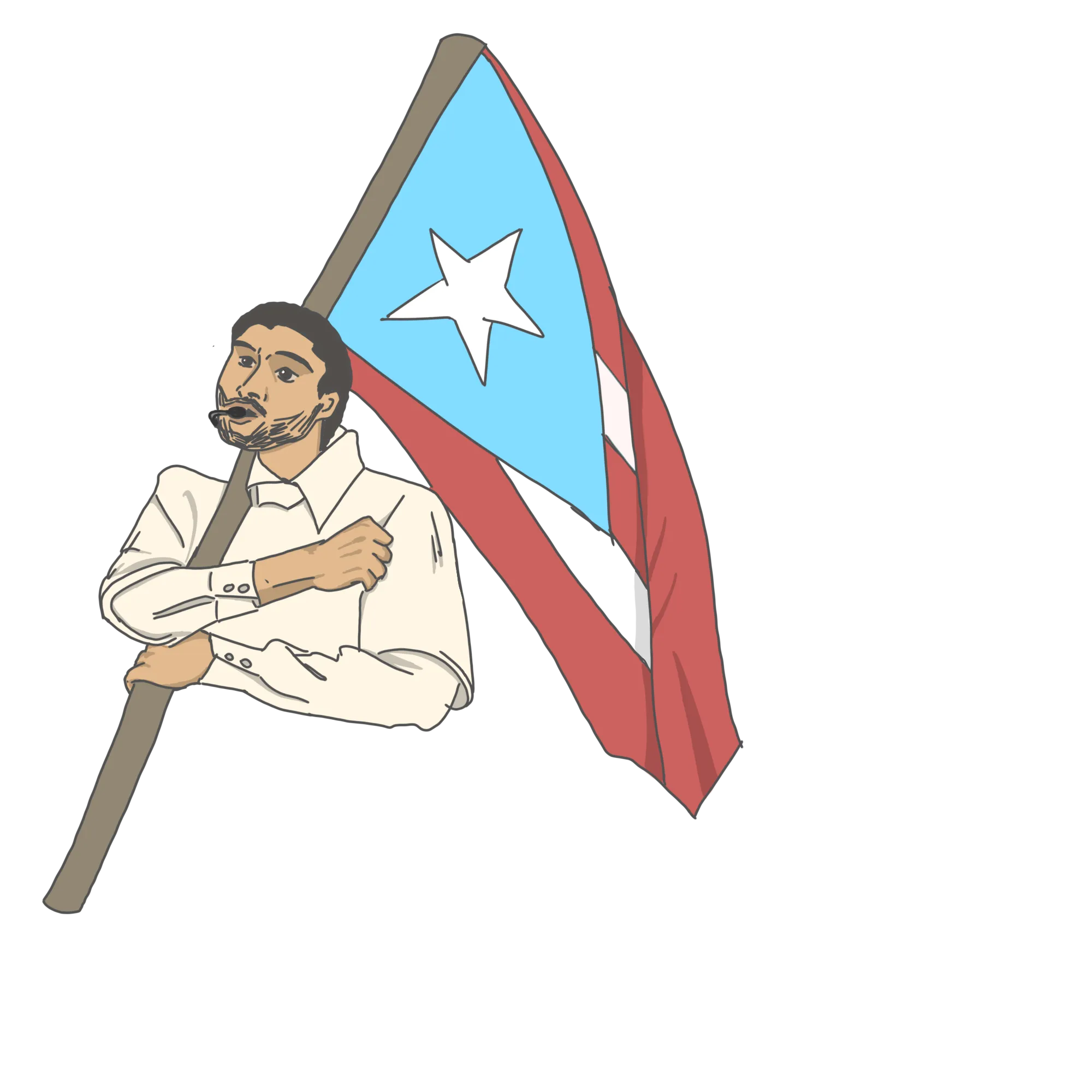
On February 8, millions of Americans huddled on their living room couches to watch the highly anticipated Super Bowl LX halftime show, starring Puerto Rican pop phenomenon Bad Bunny. With over 128 million viewers tuning in for his música urbana, his performance became the fourth-most watched halftime show after artists like Kendrick Lamar, Michael Jackson, and Usher. To many people in the Latino community, Bad Bunny headlining meant more than just quality entertainment: it meant representation on one of the biggest stages in the world.
“Choosing Bad Bunny for this event shows that the U.S. isn’t necessarily made of just stereotypical Americans. It’s made up of immigrants, people from Puerto Rico and all the South American countries. I feel like it kind of represented the Latin voice within the American communities,” said Liam Clemens ’28.
From pava hats to the coco frío stand, the carefully fashioned set was packed with symbolism intended to showcase the beauties and hardships of Puerto Rican life.
“I’m Puerto Rican, so it was really cool to see,” said Elena Barreto ’27.
The setlist was also thoughtfully composed, with songs like “El Apagón” highlighting economic and social struggle. “Lo Que le Pasó a Hawaii,” performed with guest Ricky Martin, evoked 1990s pop nostalgia in a heartfelt call to maintain Latin American culture.
“When they brought out Ricky Martin, I was surprised. I didn’t really expect it. It was really nice to bring back some old culture,” said Clemens.
Despite an emphasis on his Puerto Rican heritage, Bad Bunny recognized all South American countries and the immigrants making up Latino communities around the nation.
“Not only did he represent Puerto Rico really well, he represented all the countries, and it made the whole Hispanic community feel recognized. Especially when he was calling out all the South American countries, it made me feel shouted out. At least for me, I come from Nicaragua, and not a lot of people know where that is, so it made me really happy, ” said Annelise Narvaez Salgado ’28.
Considering recent tragedies with ICE agents nationwide, Bad Bunny’s performance was a form of protest and a chance to send a message not just Americans, but also to the world.
“With all the things going around with ICE and the danger and fear that we have now, I found it really meaningful that they had a Latin artist up there representing my voice and other voices in the community. Kind of giving us a voice we don’t have,” said Clemens.
From the moment Bad Bunny was announced as the headliner in September of 2025, politicians in the Trump administration made their opinions clear. Ranging from hate-filled tweets to threats of ICE agents at the stadium, the controversy and criticism surrounding the event boomed in the media.
“They call it American football, and even people from the White House were saying how it was a slap in the face to America. Having Bad Bunny on stage despite the criticism was really meaningful,” said Michael Caceres ’27.
At the end of the performance, Bad Bunny finished by holding up a football inscribed with the message “Together We Are America” and a jumbotron displaying a quote from his Grammys acceptance speech: “The only thing more powerful than hate is love.”
“Instead of just letting hate shut us off or shut us down, we should still keep going. Instead of getting quieter, we should get louder. We should show people what we’re really made of,” said Salgado.