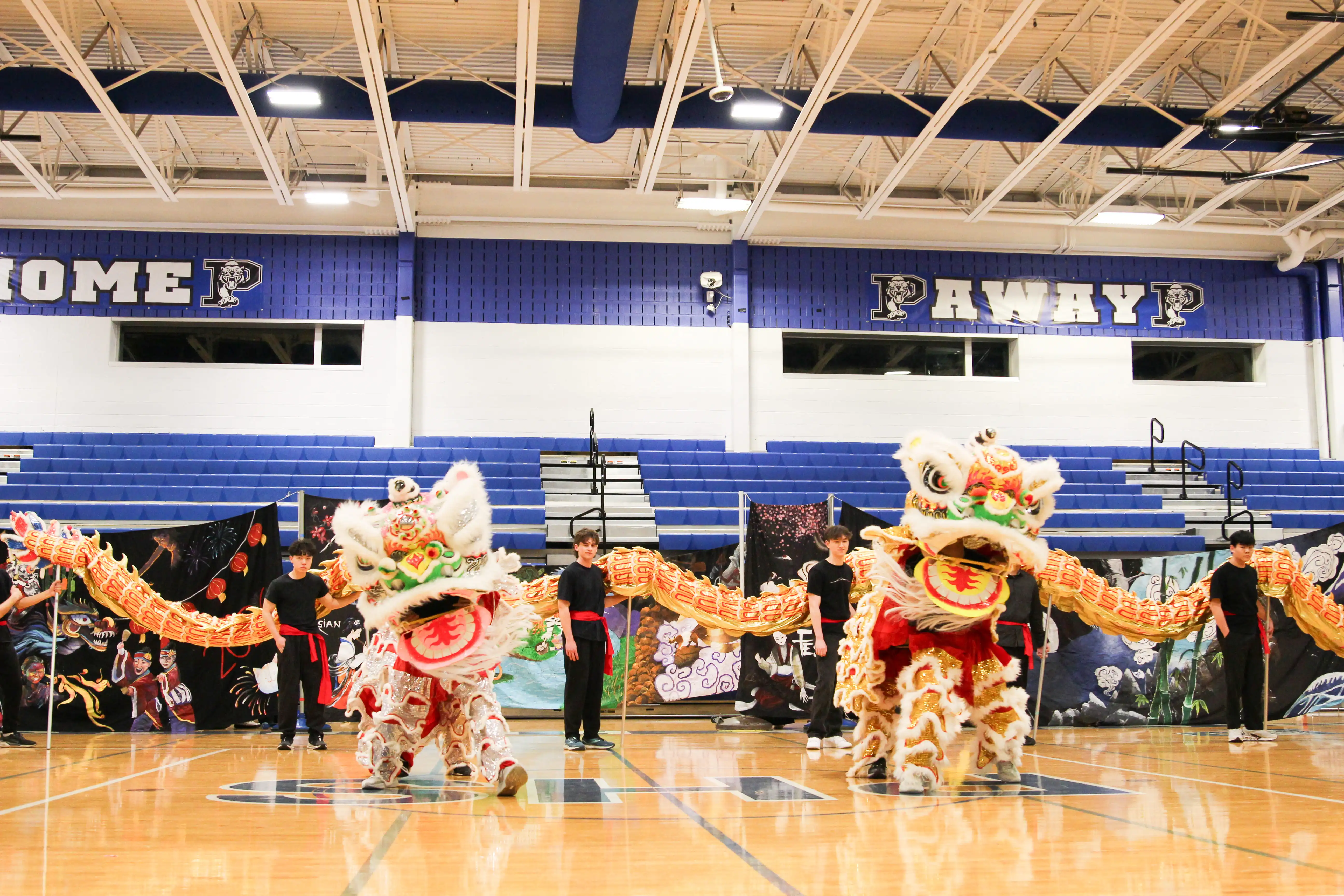
On Friday, March 6, PHS hosted the 19th annual Asian Fest. Language classes and cultural clubs at PHS collaborated during the festival, putting together two main segments: cultural booths and food stalls along with an hour of cross-cultural artistic performances.
Although the festival was originally intended to highlight Asian language programs, the event has since expanded to also include a variety of cultural clubs such as the Asian American Club, Bollywood Club, Chinese Club, Japanese Club, and Korean Club. Each organization and related language class is granted a platform to share their own cultures with the community, while simultaneously learning about and enjoying what their peers have to offer.
“The program originally was set up to be an opportunity to showcase our language programs, the diversity it brings, and the talents our students possess,” said Principal Cecilia Birge. “Over the course of almost 20 years, as the community continues to grow … We're adding more and more to that fabric of diversity.”
Although Asian Fest is hosted annually, due to the new students that participate in performances every year and different cultural aspects that clubs bring to the table, Mandarin teacher Shwu-Fen Lin prides in the event never getting old.
“The most important [thing] we provide [is] opportunity for students to demonstrate their talent,” said Lin. “Even [though] the program is Dragon dance, the student [is] different and the audience different. So still you feel this very fresh and the content inside … so that's why the audience continues to [attend].”
The stations during the cultural information session included a lesson on dandiya and an introduction to Chinese calligraphy as Asian food was sold in various stands. The performances consisted of the annual dragon and lion dances, dances ranging from traditional to more modern, and the highly anticipated Chinese yo-yo performance.
As language teachers were among the main coordinators of the event, they were able to bring authenticity to the event by sharing their own cultural experiences with the students and Princeton community.
“I was born in Japan, I was raised in Japan, I know what the Japanese culture is, and [with other teachers] it's the same thing. [Lin Laoshi] was born in China, so she can really carry and present what their culture is,” said Japanese teacher Risa Sakakibara.
Clubs met outside of school to practice performances, with full runthroughs in the weeks immediately before the festival. While some groups like the Bollywood Club and Korean Club began rehearsing dances at the beginning of the year, other performers began preparations only a month or two in advance, needing to balance their time while still keeping the performances to a high standard.
For students participating in the show, the rehearsing and performing process also contributed to their understanding of Asian Culture in Princeton.
“It really feels like you're stepping out of your comfort zone … especially with the Bollywood Club … almost all the people I don't know, so it's really cool to get a different view,” said Shaan Patel ’29. “I [saw] different clubs and … the diversity Princeton has to offer.”
The performers involved were not only restricted to PHS students. The students performing using the Chinese yo-yo were invited from West Windsor-Plainsboro High School by Lin, connecting the festival to beyond Princeton.
For participants and attendees alike, the event left a lasting impression. The performances brought students together in a shared goal to immerse themselves in Asian culture.
“Japanese culture class always has to be united to carry on something, and I think I could show that part in Asian Fest, like how we really united and do dancing together,” said Sakakibara.
While students have discussed making Asian Fest an assembly, the organizers have always emphasized the importance of the community’s role in the event.
“I think something that is a really important aspect about Asian fest is that it is not during the school day and that it's open to the public,” said Asian American Club and Korean Club leader Kyuyoung Chung ’26. “I think because of that, it's an event that can really connect the greater community and it's not just limited to our school.”
Lin emphasized that one of the primary purposes of Asian Fest is to foster understanding within the community. The festival was a chance for people to broaden their understanding of different cultures by opening a window into traditions from across Asia.
“If you would like [to] become [a] global citizen, you have to understand more cultures around the world,” said Lin. “Why we have so many arguments [and] so many conflicts [is] because I don't know you [and] you don't know me. So if more people learn … [there] will be more harmony … that's why we keep this event for 19 years now.”