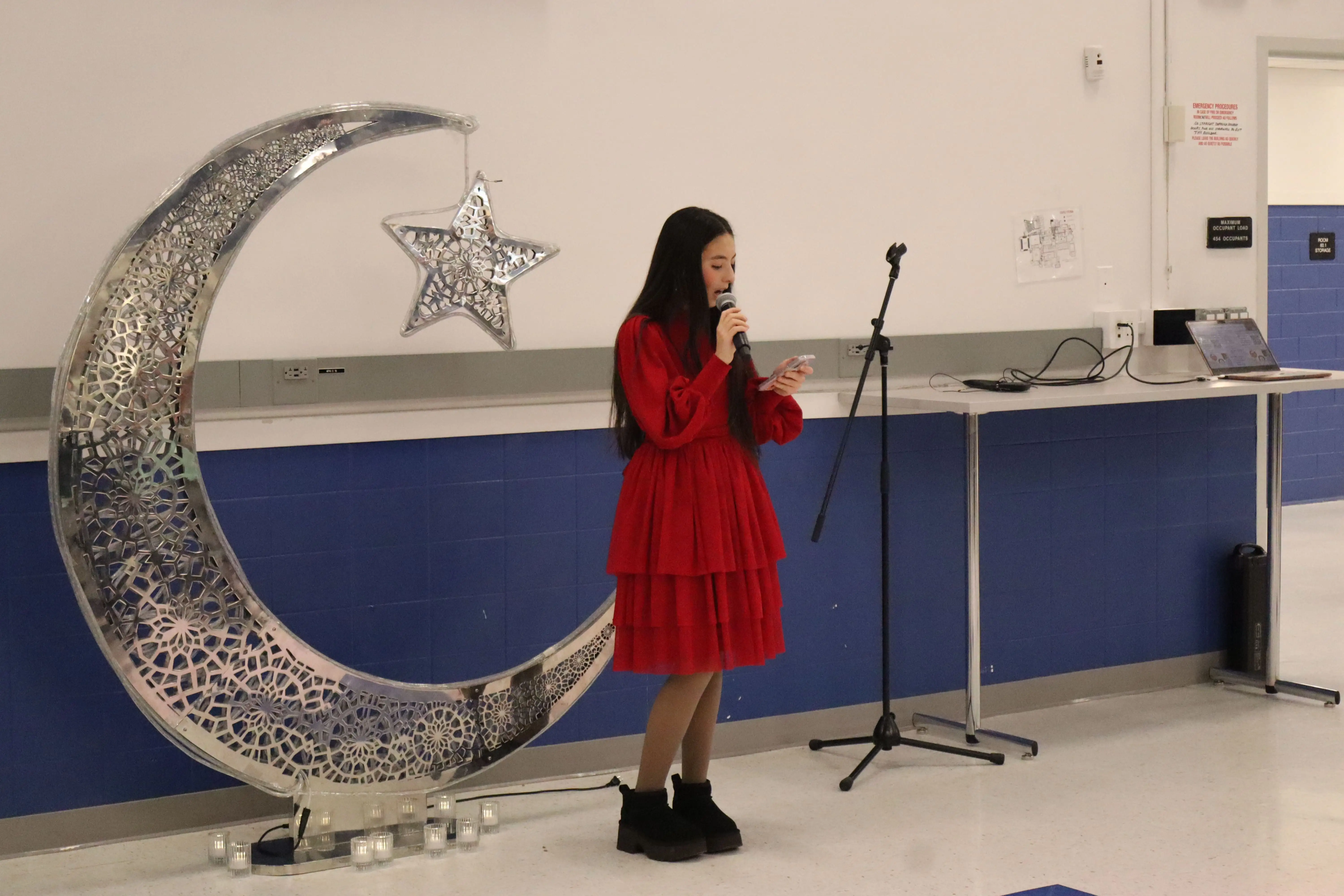
On Thursday, March 5, the Muslim Student Union (MSU) hosted the annual Interfaith Iftar in the PHS cafeteria. This year’s community Iftar gathered the largest number of participants to date, bringing together over 200 students, staff, and community members of diverse faith backgrounds to celebrate the month of Ramadan.
Iftar is the evening meal to end their daily fast at sunset during Ramadan. During this meal, Muslims break their fast by eating dates and drinking water. The community Iftar is a way to connect the non-Muslim community with the Muslim community and its traditions rather than solely teaching about the faith itself.
“I hope that [the people] can understand that community is community,” said MSU member Zoya Khan ’29. “It doesn’t matter who you are or what you practice to be part of that community.”
This year, the community Iftar revolved around the theme of gratitude and included a crescent lighting ceremony, optional prayer, Henna, and trivia games for the guests. The Iftar welcomed both Muslim and non-Muslim attendees.
“I feel like the [Iftar] is a place [and] home for anybody who feels like that they need to represent their Muslim identity,” said MSU leader Parisa Yakubova ’27. “It's not only for Muslims, I want it to be a place where people come with their friends and just hang out. I want my club to kind of be a bridge between different communities.”
The Iftar was not only designed as a moment of unity but also as an opportunity to the wider school community to learn about specific Ramadan customs. The MSU organizers sought to create an evening that would open up a space for connection, understanding, and conversation across different faith backgrounds.
“The goal is to have a place of community for Muslim students and it’s supposed to be an educational entity to teach about Islam, to demystify Islam, and to sort of normalize and make it more … approachable … so it’s a way to educate [about] the Iftar itself,” said MSU advisor Malachi Wood.
The Iftar has been hosted annually by the MSU for several years now, growing steadily in attendance and scope. What began as a small gathering has evolved into an anticipated community event that brings people of all ages, faiths, and backgrounds together.
“Honestly, it makes me feel relieved, because I'm so happy that people from all over the Princeton community are willing to take time out of their day to come and eat with us,” said Yakubova. “It makes a person feel very happy that I'm feeding these people. I'm bringing [the] community together. I'm just happy and grateful for anybody that [came].”
This year’s theme of gratitude has built on past efforts to highlight universal values shared across different religions and was touched upon several times by the three guest speakers at the event: Imam Lavon Brown, Stacy Mann, and Reverend Bob Moore. Brown focused on Islam’s teachings about charity and diversity.
“Muslims have been in the United States before the United States was the United States, and they are not the only religion that's been here before the Confederacy became the Union,” said Brown. “So it's important that we maintain good neighborly ties with [both] those that are like us and those that are not like us.”
During the community Iftar, there was also an optional prayer as the sunset approached, and after the call to break the fast, the attendees lined up for dinner in the cafeteria, sharing a meal prepared by volunteers and local restaurant contributors.
“I think the thing that's important is, while we're one community, we're made up of people that are from all different backgrounds and different beliefs, different cultures, and we should celebrate and respect everybody's cultures and backgrounds, and we should be all willing to be part of helping each other hang on to their traditions,” said Princeton Mayor Mark Freda.