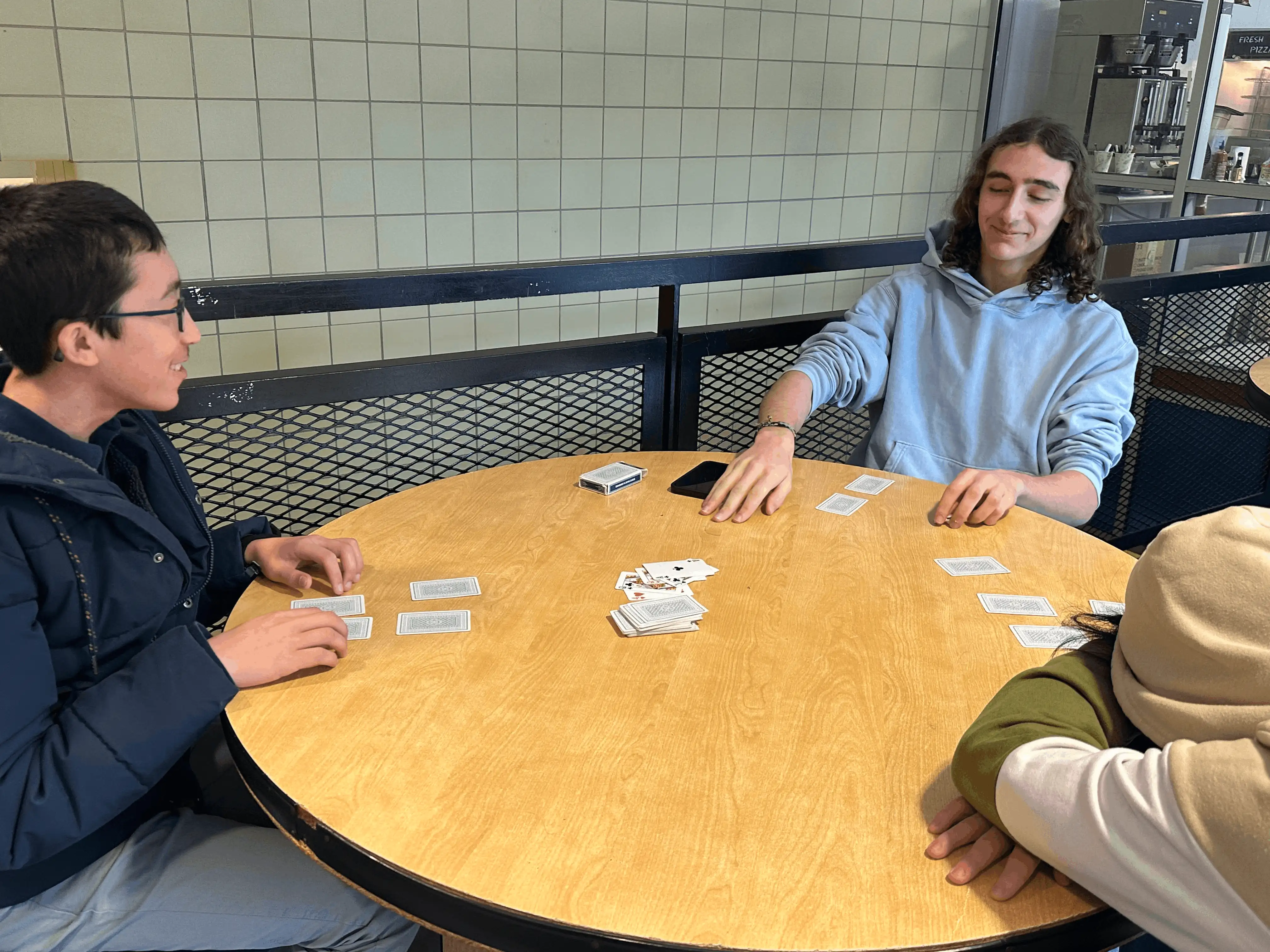
“We play a lot of card games,” shared Elizabeth Wong ’28. “There is this game called Big Two which is kind of like a regional version of [Chinese] Dou Dizhu ... If they are collaborative games I get closer to my friends.”
For Wong and many other students, the sound of dice rolling and cards being shuffled brings back happy memories of family game nights and spending time with friends. These games encourage collaboration, conversation, and healthy competition between players.
However, these shared moments are becoming less common in our digitally-dominated world. Rather than suggesting a family board game night after dinner, students opt to recharge through mindless doomscrolling or immersing themselves in a video game. These activities are not inherently harmful; in fact, video games can encourage teamwork and connection, social media can help teens maintain friendships away from school, and virtual board games bridge geographical distance. However, digital interaction lacks depth; the spontaneity, laughter, eye contact, and real-time reactions that traditional game nights bring are all diminished when they occur through a screen.
Additionally, board games and video games have distinct biological impacts. Board games can raise endorphin and serotonin levels, neurotransmitters associated with happiness and stress relief. Social media and video games trigger short-term dopamine levels; they do so by providing instant gratification. According to the Mayo Clinic, this makes them highly addictive, and if used excessively, they can lower the brain’s baseline, raising the bar for the stimulation the brain needs to feel happy. Board games also trigger dopamine levels, but at a much slower rate, leaving players feeling relaxed but still engaged.
As such, the genuine relationship and mental health benefits that playing an in-person board game provides are not replicable. In order to keep these traditional opportunities for connection alive, many communities around the world engage in group tabletop games such as mahjong in China and bridge in the Netherlands. Millennials have also revived this, often hosting game nights as a way to connect with loved ones. At PHS, the Card Game Club, started by William Liu ’26 in his sophomore year of high school, offers a place for students to relax and bond over games. Liu’s interest in card games started when he was in third grade, playing with his father. He continued the tradition with his friends at school. “Playing card games is a great way for me to destress, where I can focus on sharing time with my friends instead of on the schoolwork,” said Liu. “This was especially useful last year when I was a junior, and I had a lot of academic work. During lunch, I could play cards with my friends to help me relieve my stress on a busy day.”
In our tech-centric world, activities like board and card games are perfect for helping people to reconnect with their friends and family while participating in playful competition. The next time you reach for the video game controller, it may be worth it to reach for the deck of cards instead and rediscover the joy of simple human connection.