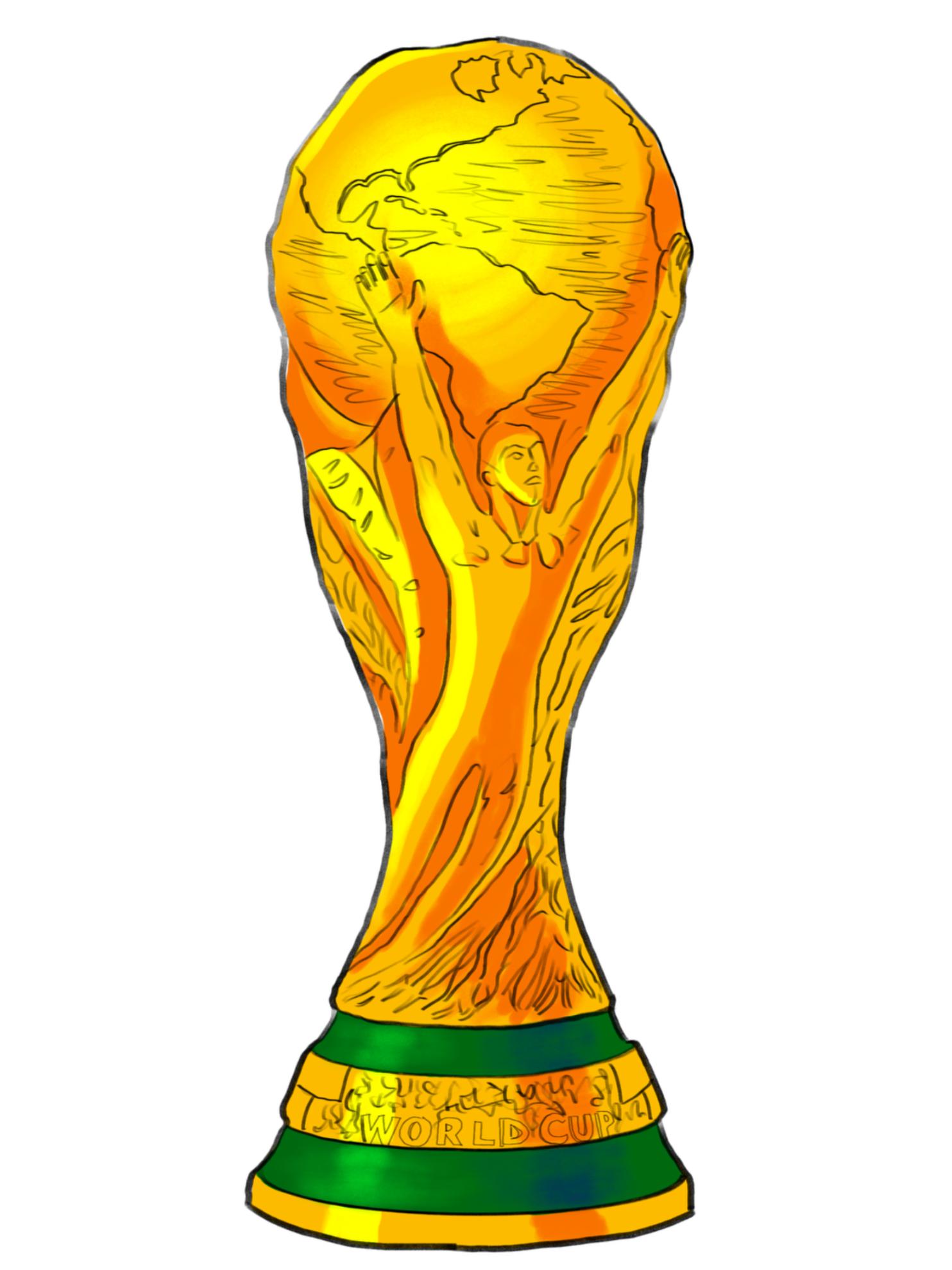
From June 11 to July 1, Canada, Mexico, and the United States will host the 2026 FIFA World Cup. The FIFA World Cup is an international men’s soccer tournament featuring national teams that compete for the title of world champion. Held every four years, the tournament draws about five billion viewers throughout its duration.
On May 6, New Jersey Governor Mikie Sherrill announced a $5 million grant that would be spread across 34 NJ-based organizations hosting fan experiences and community events for the World Cup. One such grant was given to Experience Princeton, Princeton’s downtown business association. They will be hosting food-filled World Cup watch parties on June 20, June 28, and July 14. Across the country, various towns will hold watch parties .
These watch parties will create a lively environment and community for soccer fans in NJ. With the World Cup Final and group-stage matches featuring Brazil, France, England, and Germany being held at Metlife Stadium, both Princeton and New Jersey will become major soccer hubs this summer. This will bring lots of tourism and soccer fans to these areas, and is slated to support the state’s economy.
“I think it’ll be a crazy time, because there’s gonna be a lot of tourists in the area, which is a good time to show off New Jersey. I think New Jersey in the summertime is a great place to be,” said Ryan Walsh, PHS Boys Soccer Head Coach. “I’m hoping that as people come to watch these games, they’ll also get a chance to step out and see the Jersey Shore and some of the parks.”
FIFA announced that this year’s World Cup will be the first to allow 48 teams to compete in the group stage instead of the standard 32. Although this lets smaller teams such as Jordan, Uzbekistan, and Cape Verde compete for the first time, many fans have mixed opinions on this change in the tournament.
“I thought that there are too many teams qualifying that don’t actually deserve to qualify. It’ll be fun because there’s more games and because some countries that haven’t qualified in a long time are now qualified, but they only qualified because they expanded the tournament,” said Walsh.
Although there are concerns about the expanded qualification, the tournament still carries emotional weight for fans around the world. This year’s World Cup will be the last that soccer legends such as Messi, Ronaldo, and Neymar will compete in. It’s a bittersweet moment for many fans because although these soccer greats are leaving the pitch, they will make room for new talent to step forward. Players like Lamine Yamal and Erling Haaland are poised to become the next generation of greats.
“How do you not talk about Yamal, he’s sensational,” said Walsh. “I obviously coach the high school team here, and I always joke with the guys. I’m like, ‘Hey, he’s your age, imagine if he was on this field right now, how great he would be.’”
FIFA also values their exclusive sponsorships for this year’s World Cup highly and seeks to protect the rights of these sponsors. As a result, MetLife Stadium was renamed New York New Jersey Stadium, and similar changes were applied to other stadiums and venues.
With the addition of the 16 teams to this year’s World Cup, fans expect some interesting matchups throughout the group stages. The United States will compete in Group D, where it will face Australia, Paraguay, and Turkey. Meanwhile, countries such as France, Brazil, Spain, and defending champion Argentina are viewed as strong contenders for the title.
“It appears that a lot of the European nations are more dominant,” said Ray Yamada ’29. “These nations seem to [have] a lot of talent [on] the team. There are some dark horses [though, for example] last time in the 2022 World Cup, Morocco made it all the way to the [semifinals].”
For many nations around the world, the World Cup is a powerful source of patriotism and cultivates a collective identity. The World Cup also has the potential to unite the globe even during times of turmoil and international unrest. For example, during their 2006 World Cup qualification, the Ivory Coast temporarily paused its civil war so people could watch the national team play. Beyond moments of global significance, the World Cup also brings family, friends, and teammates together as they watch matches and cheer for their countries together.
“It just brings the whole nation into one sport, which is really nice,” said Yamada. “People who don’t watch or play soccer normally are also interested as well, so it just brings unity.”
As the world shifts its attention to North America this summer, the 2026 World Cup will highlight global excitement and local pride. With New Jersey as a host, the energy of the tournament will be brought into the everyday lives of New Jerseyans, through packed stadiums and community watch parties. The expanded qualification format, coupled with the final World Cup appearances of legendary players, will bring a feeling of anticipation and nostalgia to fans across the globe. In a time when the world can feel so divided, the tournament offers billions a chance to connect, bond, and celebrate.