Starting in the 2026–2027 school year, a New Jersey State bill passed by Governor Phil Murphy will mandate a “bell to bell” ban on all personal internet-connected digital devices in public schools, which includes iPads, smart watches, and personal computers, in addition to phones. While the PPS administration has started to formalize the PHS phone policy, details are still undergoing development.
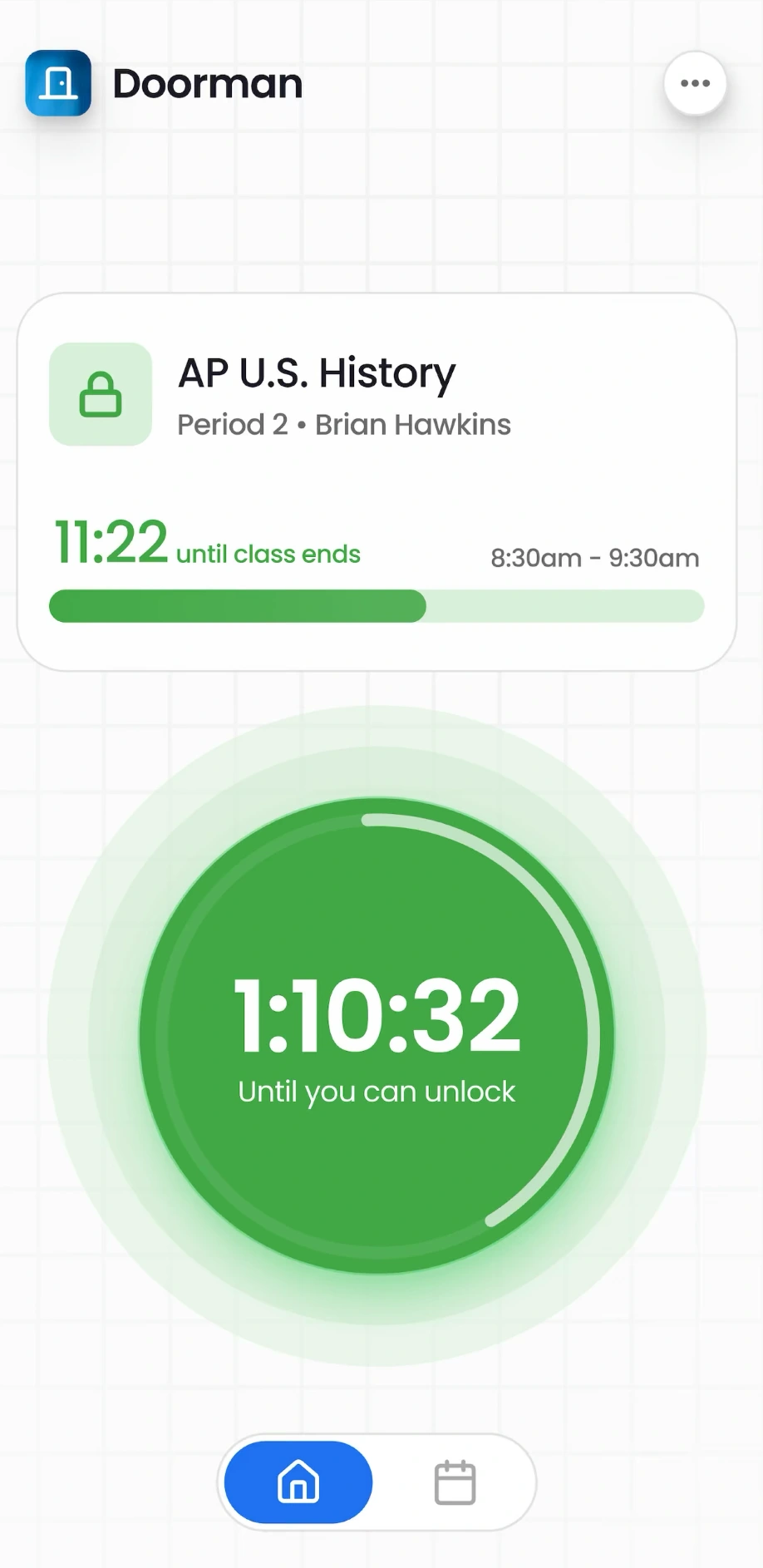
“One [way] would be to have a policy at the high school that’s just like at the middle school, which is that you can’t have your cell phones out … and if we see your cell phone out, we’re going to discipline you,” said PPS Superintendent Dr. Michael LaSusa. “The second option would be some type of app, [and] the one that we’ve been … in discussions with is called Doorman.”
The Doorman application is still in development, meaning that PHS currently plans for the first few months of next year to serve as a trial of the software. Doorman enables administrators to have limited customization as to what is accessible on students’ cell phones during school hours.
“The way that [the] app works is students download the app [and] when they come in in the morning, they just scan their phone at a reader of some kind. … Then the app essentially locks all of the other apps on the phone,” LaSusa said.
Administrators can customize Doorman by approving certain apps that may have educational value or emergency use cases. Unapproved apps, such as iMessages, will be locked, unless overridden by an emergency function that notifies teachers or supervisors upon each violation.
“[Students will] still [be] able to make phone calls from their phone, so if there were an emergency, a student could call home or could call the police,” said LaSusa. “If we approve certain apps, like for instance … Canvas … or Power School, then they could use those apps during the day.”
Administrators are waiting to receive various clarifications from the state of New Jersey. Currently, the law implies that a “bell to bell ban” means the start of the school day until the end of the school day, and does not permit access to phones during non-instructional time periods such as break, or passing times. If this is upheld, then some of the customization of Doorman will not be used, as the ban currently implies that students should not access their phones at all, unless in the event of an emergency.
“With this application, we can actually set it so it can match up with your bell schedule,” said PPS Chief Technology Officer Todd MacDonald. “As soon as that period[‘s] bell rings, we unlock your phone, so it’s open through passing time [and] through lunch, so that’s where we have flexibility, but we also are still waiting for the state to give a little bit more guidelines for us to make sure we’re in compliance.”
If a student or their parent refuses to download Doorman onto their phone, then they will not be permitted to have a cellphone during the school day. Teachers can also use Doorman to ensure all students in the classroom are in the proper locked mode. The repercussions for violators of next year’s policy have not yet been determined.
During the student forum on May 27, PHS Principal Cecilia Birge wanted to assure students that Doorman is still under legal review, but is expected to uphold state and district privacy regulations.
“[MacDonald] and I met with a principal in Massachusetts who implemented Doorman [in his school] … he said that [they] chose this company because of the fact that [it] meet[s] the Massachusetts student privacy law, and apparently Massachusetts has one of the most strict privacy law[s],” said Birge.
The school has hosted a series of forums between May 27 and June 1 to answer questions and concerns from students, parents, and teachers. Some teachers expressed their optimism and support for the ban next year. Currently, teachers are required to independently enforce their own classroom cell phone rules due to a lack of a formal universal policy.
“I tend to be most concerned about cell phones [on] things like assessments where it could provide an unfair advantage. … One of my least favorite parts of my teaching job is playing phone police,” said PHS math teacher Jackson Neuhaus. “Next year [with] the phone policy ban, I’ll probably have something more official in place that’ll be stricter and have consequences.”
Some students have expressed concerns about restricting access to their cell phones. Upon learning of the current plan to disable the text messages app, Joshua Dong ’29 cited concerns related to accessibility in communication.
“A lot of time people won’t pick up your calls because maybe their busy or their phone’s on silent … text messages are just an easier way to contact people,” Dong said.
Woodbury Junior Senior-High School, one of the schools Governor Murphy credited as having implemented a successful phone ban, began using a magnetic pouch system known as Yondr two years ago, resulting in numerous positive effects. The pouch-bound phones are in possession of the students throughout the day, but they cannot physically open the pouch until the end of the day. Portable unlock devices are carried by various staff members and are reserved for emergency or approved situations during the school day.
“We [have] had a lot of kids during our lunch … they’re in the gym playing basketball, they’re in the library ... they’re playing board games, and it’s been a better school environment overall,” said WHS Principal Dwayne Dobbins. “I can go into a classroom where there’s not a phone distracting a student.”
Although the state legislature ultimately forced the district to mobilize for a phone ban, Dr. Michael LaSusa, expressed his support for the ban, citing his belief that phones are an inhibitor of focus in the classroom, and thus education.
“The time we have in school ... is special, and we should treat it as precious, and recognize that it’s important to listen, to pay attention, to respect the other human beings that are in a classroom with us, without look[ing] at a device,” said LaSusa.